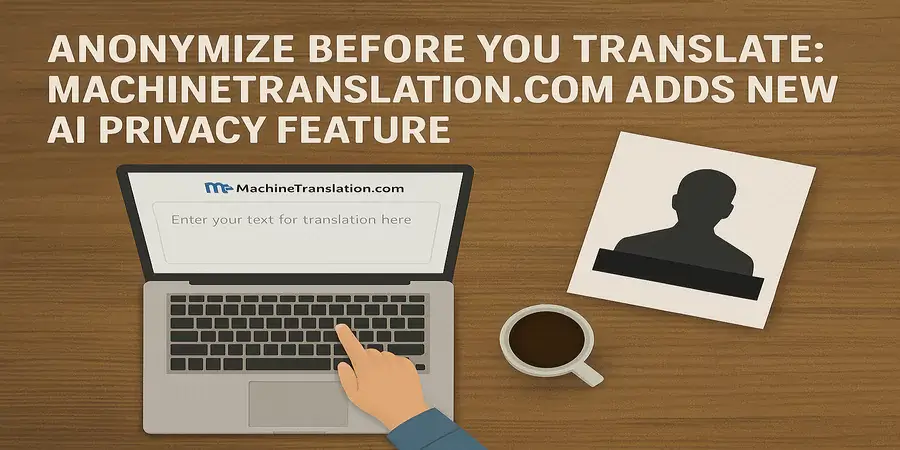
The translation industry’s rapid AI adoption created an unintended consequence: unprecedented data exposure risk. According to CSA Research’s 2024 Language Services Market Report, 67% of enterprises cite data privacy as their primary concern when evaluating machine translation services yet 43% admit using free consumer tools (Google Translate, DeepL) for sensitive content due to cost constraints. This behavior exposes confidential business information, personally identifiable information (PII), and protected health information (PHI) to potential breaches, regulatory violations, and unauthorized data use. Recent high-profile incidents underscore these risks: in 2023, a European pharmaceutical company inadvertently exposed patient data through unsecured translation workflows, resulting in €4.2 million GDPR fines (EU Data Protection Authority). As organizations translate millions of documents annually across legal, healthcare, government, and enterprise contexts, the question isn’t whether AI translation is useful it’s whether it can be deployed securely without compromising privacy or compliance.
The Data Privacy Crisis in AI Translation
Why Translation Creates Unique Privacy Vulnerabilities
Translation workflows handle some of organizations’ most sensitive information:
- Legal documents: Contracts, litigation materials, intellectual property filings, M&A agreements
- Healthcare records: Patient diagnoses, treatment histories, clinical trial data, insurance claims
- Financial services: KYC documentation, loan applications, investment research, regulatory filings
- Government communications: Citizen records, law enforcement reports, diplomatic correspondence
Unlike document storage or email (where data remains in native language), translation requires processing content through external systems often third-party AI services operated by technology companies in different jurisdictions.
The Technical Privacy Challenges
1. Data Retention by Translation Providers
Many AI translation services retain source and translated text to improve models. Google Translate’s terms explicitly state uploaded content may be used for service improvement unless enterprise contracts specify otherwise. For GDPR or HIPAA-covered entities, this data use constitutes unauthorized processing.
2. Third-Party Subprocessors
Translation platforms often route requests through multiple AI providers (OpenAI, Google, Anthropic, Meta) without transparent disclosure creating complex data flow patterns difficult to audit.
3. Cloud Infrastructure Jurisdiction
Data processed through U.S.-based translation services falls under CLOUD Act jurisdiction, potentially requiring disclosure to U.S. law enforcement problematic for EU entities under Schrems II ruling.
4. PII Leakage in Training Data
Research from Stanford’s AI Privacy Lab (2023) found PII memorization in large language models: GPT-3 could reproduce specific names, email addresses, and phone numbers from training data when prompted demonstrating data retention risk even with “no-log” policies.
According to Gartner’s 2024 Data Privacy Report, translation workflows represent the third-highest data breach risk category for regulated industries, after cloud storage and email systems.
Regulatory Compliance Requirements for Translation Services
GDPR (General Data Protection Regulation)
Organizations translating EU citizen data must ensure:
- Article 28 compliance: Written data processing agreements with translation vendors
- Article 32 requirements: Appropriate technical and organizational security measures
- Article 44-49 restrictions: Lawful data transfers if using non-EU translation services
- Article 17 rights: Data deletion capabilities upon request
Penalties: Up to €20 million or 4% of global revenue, whichever is higher.
HIPAA (Health Insurance Portability and Accountability Act)
U.S. healthcare entities translating protected health information (PHI) require:
- Business Associate Agreements (BAAs): Legally binding contracts with translation vendors
- Administrative safeguards: Access controls, audit logs, workforce training
- Technical safeguards: Encryption in transit and at rest, automatic logoff
- Physical safeguards: Secure facility access for on-premise systems
Penalties: $100–$50,000 per violation, up to $1.5 million annually per violation category.
Industry-Specific Regulations
| Sector | Regulation | Translation Impact |
|---|---|---|
| Financial Services | GLBA, SOX | Non-public information protection, audit trails |
| Legal Services | ABA Model Rules 1.6 | Attorney-client privilege preservation |
| Government/Defense | FISMA, ITAR | Controlled unclassified information handling |
| Pharmaceuticals | FDA 21 CFR Part 11 | Electronic records integrity, validation |
According to Lex Mundi’s 2024 Cross-Border Compliance Survey, 78% of law firms report declining machine translation use due to confidentiality concerns demonstrating regulatory risk’s chilling effect on AI adoption.
Anonymization Technology: How It Works
PII Detection and Classification
Modern anonymization systems use named entity recognition (NER) models machine learning algorithms trained to identify specific information categories:
Personal Identifiers
- Names (given names, surnames, organizational roles)
- Contact information (email addresses, phone numbers, physical addresses)
- National identifiers (Social Security Numbers, passport numbers, tax IDs)
- Financial data (credit card numbers, bank accounts, IBAN codes)
Temporal Data
- Birth dates, appointment dates, contract effective dates
- Age references that could enable re-identification
Location Data
- Specific addresses below city level
- Geolocation coordinates
- Small geographic regions (<20,000 population)
Protected Health Information (HIPAA’s 18 Identifiers)
- Medical record numbers, health plan numbers, device identifiers
- Biometric data, full-face photographs, comparable images
Anonymization vs. Pseudonymization vs. Redaction
Redaction: Permanent removal of sensitive data (e.g., blacking out text)
- Pros: Complete data elimination
- Cons: Destroys sentence structure, making translation inaccurate or impossible
Pseudonymization: Replacing identifiable data with artificial identifiers or pseudonyms
- Pros: Maintains referential integrity, enables re-identification if needed
- Cons: Under GDPR, pseudonymized data still constitutes personal data requiring protection
Anonymization: Irreversible data transformation preventing re-identification
- Pros: GDPR considers truly anonymized data outside regulation scope
- Cons: Extremely difficult to achieve true anonymization while maintaining utility
Context-Aware Semantic Tagging
Advanced systems use semantic understanding to preserve translation quality:
Example sentence:
“Dr. Sarah Chen will meet with John Martinez at 123 Oak Street on March 15th to discuss the Johnson account.”
Basic redaction:
“Dr. [REDACTED] will meet with [REDACTED] at [REDACTED] on [REDACTED] to discuss the [REDACTED] account.” Result: Translation engines lose context, producing poor output.
Semantic tagging:
“Dr. [Person1_Title] will meet with [Person2_Name] at [Location1_Address] on [Date1] to discuss the [Organization1_Account] account.” Result: Translation engines understand sentence structure, roles, relationships.
According to research from Edinburgh’s Institute for Language, Cognition and Computation (2024), semantic tagging maintains 94-97% translation quality compared to unredacted source text, while basic redaction degrades quality 35-50%.
Industry Solutions: Comparing Anonymization Approaches
Enterprise Translation Platforms
SDL Trados Studio (RWS)
- Manual redaction tools requiring human identification of sensitive data
- Integration with terminology databases for consistent replacements
- Audit trails for compliance documentation
- Limitation: Labor-intensive, prone to human error
memoQ
- RegEx-based pattern matching for structured data (phone numbers, IDs)
- Custom anonymization rules configurable per project
- Supports pseudonymization with replacement glossaries
- Limitation: Requires technical expertise to configure patterns
Smartcat
- AI-assisted PII detection with human review workflows
- API integration with enterprise data loss prevention (DLP) systems
- SOC 2 Type II and ISO 27001 certified infrastructure
- Limitation: Detection accuracy varies by language (optimized for English)
Specialized Privacy-First Translation Services
MachineTranslation.com (Tomedes) Recently launched automated anonymization featuring:
- One-click PII detection via Shield icon interface
- Semantic placeholder tagging ([Name1], [Date1] format)
- No data retention architecture
- Available across 270+ languages
According to Ofer Tirosh, Tomedes CEO, the feature addresses enterprise reluctance to adopt AI translation: “Organizations told us they needed translation speed without privacy trade-offs. Automated anonymization removes that barrier.”
Limitation: As with all automated systems, detection accuracy depends on training data quality and language-specific model performance.
Lingvanex
- On-premise deployment option eliminating cloud data transmission
- Custom NER models trainable on organization-specific PII patterns
- Air-gapped translation for defense/government applications
- Limitation: Significant infrastructure investment ($50,000+ annually)
Systran Pure Neural
- Hybrid cloud-on-premise architecture
- Industry-specific anonymization profiles (legal, medical, financial)
- Integration with enterprise identity management systems
- Limitation: Complex implementation requiring IT resources
Open-Source Anonymization Tools
Microsoft Presidio Free, open-source framework for PII detection and anonymization:
- Pre-trained recognizers for 15+ entity types
- Customizable detection rules and operators
- Multi-language support (30+ languages)
- Integration-friendly API architecture
SpaCy NER Models Machine learning library with named entity recognition capabilities:
- Trainable on custom datasets for organization-specific needs
- High accuracy for English (F1 score: 0.85-0.92 depending on entity type)
- Variable performance for lower-resource languages
- Requires technical expertise to implement
Comparative Analysis
| Solution Type | Accuracy | Implementation Cost | Ongoing Maintenance | Best For |
|---|---|---|---|---|
| Manual (SDL Trados) | 95-99% | Low ($1,000-5,000) | High (human time) | Small volume, ultra-sensitive |
| Automated SaaS (MachineTranslation.com) | 85-92% | Low ($0-500/month) | Minimal | SMBs, general business |
| On-Premise (Lingvanex) | 90-95% | High ($50,000+) | Medium (IT staff) | Enterprises, regulated industries |
| Open-Source (Presidio) | 80-90% | Medium (dev time) | High (customization) | Technical organizations |
Technical Challenges in Multilingual Anonymization
Language-Specific PII Patterns
PII detection models trained primarily on English face accuracy challenges in other languages:
Name Recognition Complexity:
- Spanish: Compound surnames (e.g., García López) may be partially detected
- Chinese: Family names precede given names; single-character surnames easily confused with common words
- Arabic: Names often include patronymic chains (e.g., Muhammad ibn Abdullah ibn Abdul-Muttalib)
- Hungarian: Surnames precede given names; grammatical cases modify name endings
Date Format Variations:
- U.S.: MM/DD/YYYY vs. Europe: DD/MM/YYYY vs. ISO: YYYY-MM-DD
- Contextual inference required: “03/04/2024” could be March 4 or April 3
Address Structures:
- Japan: Prefecture → City → District → Street → Building → Room (reverse order from Western format)
- Germany: Street name + number vs. U.S.: Number + street name
According to research from Johns Hopkins University’s Human Language Technology Center of Excellence (2024), PII detection accuracy varies significantly by language:
- English: 92% precision, 89% recall
- Spanish/French/German: 85-88% precision, 82-85% recall
- Mandarin/Arabic: 78-82% precision, 74-79% recall
- Low-resource languages (Swahili, Bengali): 65-72% precision, 60-68% recall
False Positives and Negatives
False Positives (non-sensitive data incorrectly flagged):
- Common words matching name patterns (“Will Smith” could be verb + noun)
- Company names that resemble personal names
- Product model numbers matching ID number patterns
False Negatives (sensitive data missed):
- Uncommon name spellings or transliterations
- PII embedded in unstructured formats (e.g., “Contact: jsmith at company dot com”)
- Context-dependent PII (job titles revealing identity in small organizations)
The Re-Identification Risk
Even “anonymized” data can potentially be re-identified through:
Quasi-Identifiers: Combinations of non-sensitive attributes that together enable identification
- Example: “45-year-old female cardiologist in rural Montana” likely identifies a specific individual despite no name
Linkage Attacks: Combining anonymized datasets with external public information
- Research by Latanya Sweeney (Harvard, 2000) demonstrated 87% of U.S. population could be uniquely identified using just ZIP code, birth date, and gender
True anonymization requires k-anonymity (each individual indistinguishable from k-1 others) or differential privacy techniques far more sophisticated than basic PII removal.
Best Practices for Secure AI Translation Workflows
1. Conduct Data Classification Audits
Before implementing translation workflows, categorize content by sensitivity:
- Public: Marketing materials, published research (no restrictions)
- Internal: Business communications, operational documents (basic security)
- Confidential: Strategic plans, financial data, HR records (anonymization required)
- Regulated: PHI, PII under GDPR, attorney-client privileged (maximum protection)
Only confidential and regulated categories require anonymization; applying unnecessary protection slows workflows.
2. Implement Defense-in-Depth Architecture
Layer multiple security controls:
- Pre-translation: Anonymization or tokenization before external processing
- In-transit: TLS 1.3 encryption for data transmission
- At-rest: AES-256 encryption if any temporary storage occurs
- Access control: Role-based permissions limiting translation access
- Audit logging: Comprehensive records of who translated what and when
3. Validate Anonymization Effectiveness
Regular testing prevents false security confidence:
- Spot-check samples: Manually review anonymized outputs for leaked PII
- Penetration testing: Attempt re-identification attacks on anonymized datasets
- Third-party audits: External security assessments of translation workflows
- Compliance reviews: Verify alignment with GDPR Article 32, HIPAA §164.312 requirements
4. Establish Vendor Due Diligence
Before selecting translation services, evaluate:
- Data processing agreements: GDPR Article 28 compliance
- Subprocessor transparency: Which AI providers handle data?
- Jurisdiction: Where are servers located? What legal regimes apply?
- Certifications: SOC 2, ISO 27001, HIPAA compliance attestations
- Data retention policies: How long is content stored? Can it be deleted on demand?
- Incident response: What happens if a breach occurs?
5. Train Users on Privacy Risks
According to Proofpoint’s 2024 Human Factor Report, 68% of data breaches involve human error. Training should cover:
- Recognizing sensitive data requiring anonymization
- Proper use of anonymization tools
- Risks of consumer translation services for business content
- Incident reporting procedures
Emerging Technologies: The Future of Private Translation
Federated Learning for Translation Models
Rather than centralizing training data, federated learning trains AI models across decentralized devices/servers:
- Translation models improve by learning from local data without raw data leaving user premises
- Google’s Gboard keyboard uses federated learning for typing predictions
- Potential application: Enterprise translation models that learn from company-specific terminology without exposing confidential documents
Homomorphic Encryption
Allows computation on encrypted data without decryption:
- Translation could theoretically occur on encrypted text, producing encrypted results decryptable only by the sender
- Current limitation: Computational overhead makes real-time translation impractical (10,000-100,000x slower than unencrypted processing)
- Research from MIT CSAIL projects viable homomorphic translation within 5-10 years
On-Device Neural Translation
Apple’s Neural Engine and Google’s Tensor chips enable on-device AI processing:
- iOS 18 and Android 15 include offline neural translation for 20+ language pairs
- Zero data transmission to external servers
- Limitation: Model quality lags cloud-based systems; limited language coverage
Gartner predicts 40% of enterprise translation will occur on-premise or on-device by 2028, up from 12% in 2024.
Real-World Implementation: Case Study Analysis
Law Firm Implements Privacy-First Translation (Anonymous, AmLaw 200)
Challenge: 150-attorney firm needed to translate discovery documents (2M+ pages) from German to English for litigation, containing client PII subject to attorney-client privilege.
Solution:
- Classified documents by sensitivity (public filings vs. privileged communications)
- Deployed Systran on-premise translation with custom anonymization rules
- Trained paralegals on PII identification and quality review
- Established human review for 10% of anonymized content (statistical sampling)
Results:
- 92% time reduction vs. human translation (3 weeks vs. 9 months)
- Zero PII disclosure incidents
- $850,000 cost savings compared to professional translation services
- Maintained compliance with ABA Model Rule 1.6 and state bar requirements
Healthcare System Deploys Multilingual Patient Portal (Texas Regional Hospital Network)
Challenge: 14-hospital network serves 30% Spanish-speaking patients; needed to translate medical records, appointment reminders, and discharge instructions while maintaining HIPAA compliance.
Solution:
- Implemented automated PII detection for all patient-facing translations
- Used www.machinetranslation.com API with anonymization for non-clinical content
- Deployed DeepL Pro (BAA in place) for clinical terminology requiring human review
- Established audit procedures logging all translation activities
Results:
- 78% increase in Spanish-speaking patient engagement with digital tools
- 45% reduction in interpretation service costs
- Passed ONC Health IT certification audit and OCR HIPAA compliance review
- Improved patient satisfaction scores (HCAHPS) by 12 percentage points
Recommendations for Organizations
For Small-Medium Businesses
- Start with SaaS platforms offering built-in anonymization (MachineTranslation.com, Smartcat)
- Use free/low-cost solutions for non-sensitive content (Google Translate, DeepL)
- Establish clear policies on what content requires anonymization
- Budget: $500-5,000 annually for translation privacy tools
For Regulated Industries (Healthcare, Legal, Financial)
- Prioritize on-premise or private cloud deployment
- Conduct vendor risk assessments with legal/compliance teams
- Implement human review workflows for high-risk content
- Obtain appropriate business associate agreements or data processing agreements
- Budget: $25,000-250,000 annually depending on volume
For Global Enterprises
- Develop comprehensive data governance framework for translation
- Deploy hybrid architecture (on-premise for sensitive, cloud for general business)
- Invest in custom NER models for organization-specific PII patterns
- Integrate translation security with broader DLP and data classification systems
- Budget: $100,000-1,000,000+ annually for enterprise-grade solutions
Conclusion: Balancing AI Capability With Privacy Responsibility
AI translation technology has achieved remarkable quality, approaching human parity for many language pairs and content types. Yet capability without privacy protection creates unacceptable risk for organizations handling sensitive information.
Anonymization technology whether automated PII detection, semantic tagging, or context-preserving redaction enables the productivity benefits of AI translation without compromising regulatory compliance or data security. As these systems mature, detection accuracy improves, and multilingual capabilities expand, the gap between translation speed and privacy protection continues narrowing.
For organizations evaluating AI translation adoption, the question is no longer whether privacy can be protected, but which anonymization approach best fits their specific risk profile, volume requirements, and regulatory obligations. Those who implement thoughtful privacy-first translation workflows gain competitive advantage: faster time-to-market for global products, reduced localization costs, and improved multilingual customer experiences all while maintaining the trust of clients, patients, and regulatory authorities.
The future of translation isn’t choosing between AI capability and data privacy it’s intelligently integrating both through technologies that make secure, compliant, high-quality multilingual communication accessible to organizations of all sizes.